The Magic Trick Your Body Loves: Eat Less Often, Feel Stronger!

Once upon a time, there was a little village where people ate all the time, from morning till night. But one wise old doctor named Dr. Time noticed something strange—many villagers felt tired, had big bellies, and got sick often.
One day, Dr. Time gathered everyone and said, “Your body is like a superhero! But to fight bad guys (like fat and sickness), it needs time to rest.”
He explained that when we don’t eat for some hours, our body starts using stored fat as fuel. It also begins autophagy, a magic clean-up process where old, weak cells are thrown away, making room for strong, new ones. “It’s like cleaning your room,” he smiled.
So, the villagers started a new rule: They ate for only 8 hours a day and rested their bellies for 16 hours. Slowly, something amazing happened! They felt lighter and more energetic and even looked younger. Their bodies became stronger, and their minds sharper.
Dr. Time clapped and said, “See? When you let your body rest, it rewards you with health!”
And from that day, the village was full of happy, healthy people—just because they learnt the magic of intermittent fasting!
So, What Is This Magic in Real Life?
The story of Dr. Time and the village is a simple way to understand a powerful health strategy called Intermittent Fasting (IF). It’s not a diet that tells you what to eat, but rather a pattern that tells you when to eat.
By giving your body a dedicated break from digestion, you unlock its natural ability to heal, burn fat, and reset itself. Let's look at the science behind the magic.
The Two Stars of the Show: Fasting & Autophagy
1. Intermittent Fasting (IF): The Eating Pattern
Intermittent fasting simply means cycling between periods of eating and not eating (fasting). The 16:8 method, just like the one the villagers used, is the most popular. You fast for 16 hours and have an 8-hour window to eat your meals.
Other common methods include:
- The 5:2 Diet: Eating normally for five days a week and restricting calories to about 500-600 on two non-consecutive days.
- Eat-Stop-Eat: Doing a full 24-hour fast once or twice a week.
2. Autophagy: Your Body’s ‘Magic Clean-Up’
The word autophagy literally means "self-eating." While that sounds a little strange, it’s actually one of the most beneficial processes for your body. During a fast, when your body isn't busy digesting food, it starts this deep-cleaning process.
Think of it this way: Your cells create waste every day. If this waste isn't cleared out, it can lead to problems. Autophagy is the system that identifies and removes these old, damaged, and dysfunctional parts of your cells. This process helps reduce inflammation, slow down aging, and protect you from various diseases.
Getting Started on Your Own Adventure
Thinking of trying this magic trick? Here is a simple guide to get you started on the 16:8 method.
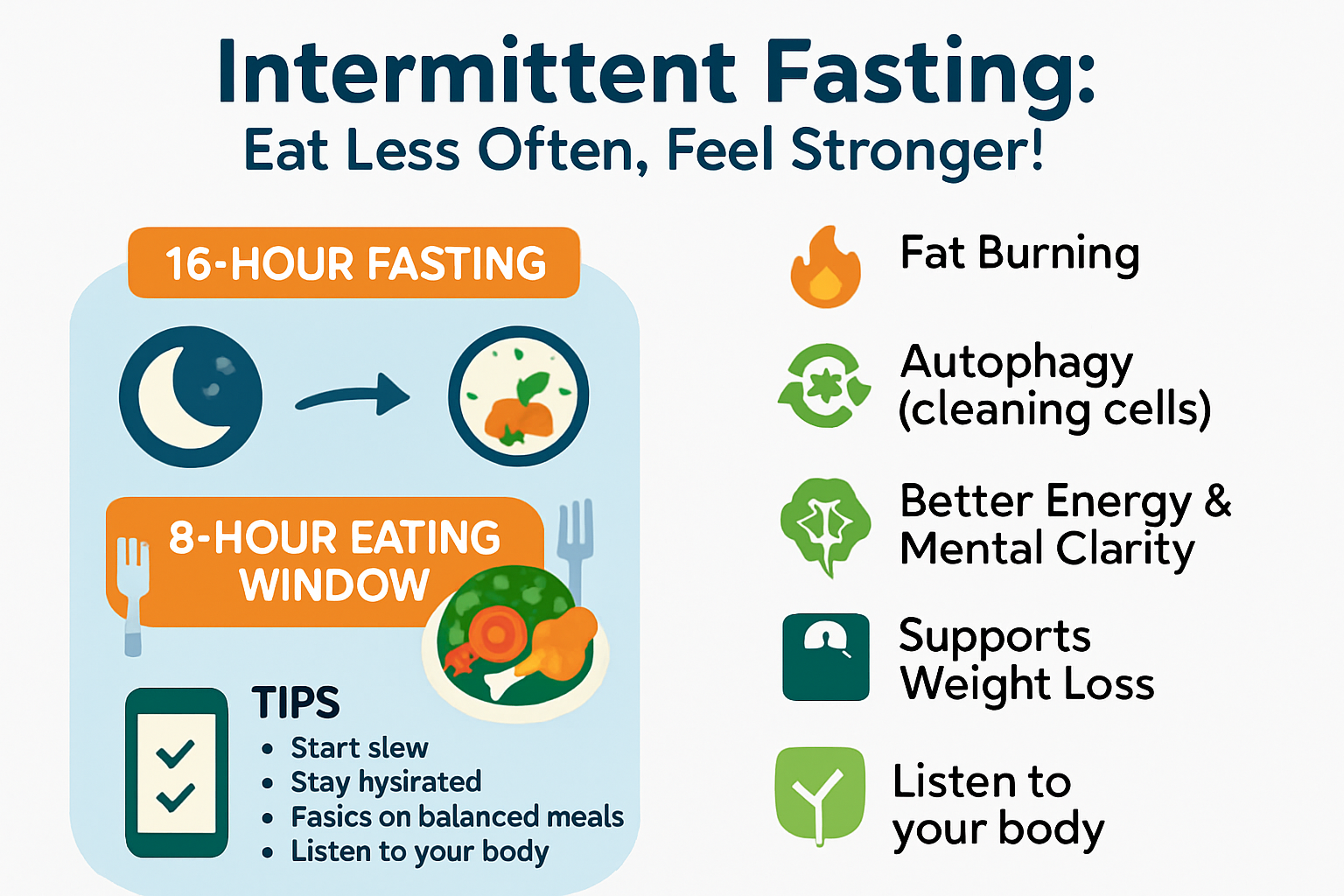
- Pick Your 8-Hour Window: Choose a window that fits your lifestyle. Many people find it easy to eat between 12 PM and 8 PM, which means they just skip breakfast.
- Stay Hydrated: During your 16-hour fast, you can and should drink plenty of water. Unsweetened tea and black coffee are also perfectly fine and can help manage hunger.
- Eat Nutritious Foods: When your eating window opens, focus on whole, nutrient-dense foods. Fill your plate with lean protein, healthy fats, complex carbohydrates, and lots of fruits and vegetables.
- Listen to Your Body: It might take a little time for your body to adjust. It's okay to start slowly (perhaps with a 12-hour fast) and gradually increase the time.
A Gentle Word of Caution: Is It Safe for Everyone?
While intermittent fasting is safe and beneficial for most people, it's not a one-size-fits-all solution. You should be cautious and consult a healthcare professional before starting if you:
- Are pregnant, breastfeeding, or trying to conceive.
- Have a history of eating disorders.
- Have diabetes or blood sugar regulation issues.
- Are underweight or have certain medical conditions.
Final Thoughts: Your Health Is Your Greatest Treasure
Just like the villagers in our story, you have the power to transform your health with small, intentional changes. Intermittent fasting isn’t about deprivation; it’s about creating a rhythm that allows your body to rest, repair, and reward you with better health and more energy.
What is one small step you could take today on your own health adventure? Share your thoughts in the comments below!
Disclaimer: This article is for informational purposes only. It is not intended to be a substitute for professional medical advice, diagnosis, or treatment. Always seek the advice of your physician or another qualified health provider with any questions you may have regarding a medical condition.
Comments
Post a Comment